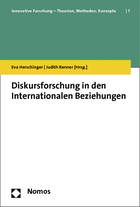
 A new book on Discourse Studies in International Relations (in German) is out now. The volume is edited by Eva Herschinger and Judith Renner and contains my contribution on International Legal Positions: The Discoursive Production of Democratic Foreign Politics (in orig.: Völkerrechtspositionen: Die diskursiven Produktionsbedingungen demokratischer Außenpolitik). More information can be found here.
Author Archives: drliste
New Working Paper on “Organizing Fragmented Spatiality”
A new working paper related to the COST Action 1003 is now online here.
Abstract: While the academic discipline of International Law (IL) has been facing an enormous debate on fragmentation and constitutionalization, the traditional assumption of the territorial grounding of international law had been lost out of sight. Either, it seems, international law follows a territorial paradigm of international normative order or it enters a process of constitutionalization and, in so doing, transcends the territoriality upon which it had once been built. While the territorial grounding of international law in the nation-state appears “old-fashioned,” the merging of territoriality within one unitary global constitutional order seems “post-modern” but also somewhat naïve. Complex phenomena of governance like the fragmentation of international law or the proliferation of global administrative agencies, as well as, more concrete scripts of global regulation like newly emerging forms of global health regulation or the “global” development of domestic antitrust laws indicate that this dichotomy is odd. Debates on the fragmentation of international law and global governance widely overlook that governance practice does in fact produce space, that is, collaborates in the very production of the space they claim to regulate.
ISA2014: Transnational Human Rights Litigation and the Production of Normative Space
I have uploaded my spatial analysis on Kiobel amicus briefs just presented at ISA2014 in Toronto ssrn.com/abstract=2413411
International Studies Association Annual Meeting in Toronto, 26-29 March 2014
The ISA 2014 is apporaching quickly. The program is online here. I will participate in three panels.
Wednesday, March 26, 8:15 AM,
WA05: The Politics of Law and Space
Dominion South, Sheraton Centre Toronto
Contributing a paper: Transnational Human Rights Litigation and the Production of Normative Space
Thursday, March 27, 4:00 PM
TD69: Ritual in International Criminal Justice
Suite 2429, Sheraton Centre Toronto
Participating as discussant
Friday, March 28, 1:45 PM
FC35: Performing Normativity
Dufferin, Sheraton Centre Toronto
Participating as chair
Rechtskulturen Reading Circle
Fragmented Normativity and International Relations
Di 11 Mar 2014, 16:00–18:00, Humboldt-Universität zu Berlin, Juristische Fakultät, Room E23, Unter den Linden 9, 10099 Berlin
Convener: Philip Liste
Discussion on:
1) Büthe, Tim and Walter Mattli. 2011. The New Global Rulers: The Privatization of Regulation in the World Economy. Princeton, NJ: Princeton University Press (ch. 2)
2) A. Claire Cutler. 2013. Legal Pluralism as the “Common Sense” of Transnational Capitalism. Oñati Socio-legal Series 3:4, 719-740. Available from: http://ssrn.com/abstract=2327501
The reading circle is intended as a space of academic exchange outside the usual classroom/conference setting and open to anybody interested. Please write an e-mail to rechtskulturen@rewi.hu-berlin.de if you would like to participate in a session and we will be happy to forward you the text. We will keep you up-dated about our selection of texts and meetings. Of course, we are also very much open for any suggestions you might have and would enjoy the opportunity to discuss texts/topics suggested by you.
R.I.P.: The Idea of Frankfurt’s Ivory Tower
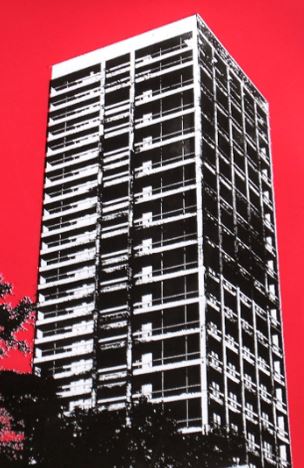 Spectacular or sad day? Last week, Goethe University’s AFE Tower, which was hosting the Social Sciences Faculty, was blown – in order to construct bright and new highrises. With its all grey-in-grey façade and all the graffiti in the elevators and all over the walls, this “Ivory Tower” was also a symbol of critical thought. Last week this symbol collapsed. Welcome to Frankfurt 2.0!
Contested Collisions Conference in Bremen
From Jan 10-12 I will participate in a conference on “Contested Collisions” in Bremen. This three-day conference will controversially discuss the concept of “regime collisions.” The concept is used to describe the fact that fragmentation into an increasing number of international regimes with overlapping areas of competence can lead to contradictory decisions or mutual obstruction. A conference program can be found here.
Forthcoming: Transnational Human Rights Litigation and Territorialized Knowledge: Kiobel and the ‘Politics of Space’
The paper “Transnational Human Rights Litigation and Territorialized Knowledge: Kiobel and the Politics of Space” is forthcoming in Transnational Legal Theory (vol. 5, Issue 1). A pre-version is now online on SSRN under http://ssrn.com/abstract=2370413
Abstract:
In Kiobel v. Royal Dutch Petroleum Dutch and British private corporations were accused of having aided and abetted in the violation of the human rights of individuals in Nigeria. A lawsuit, however, was brought in the United States, relying on the Alien Tort Statute — part of a Judiciary Act from 1789. In its final decision on the case, the US Supreme Court has strongly focused on ‘territory.’ This usage of a spatial category calls for closer scrutiny of how the making of legal arguments presupposes ‘spatial knowledge,’ especially in the field of transnational human rights litigation. Space is hardly a neutral category. What is at stake is normativity in a global scale with the domestic courtroom turned into a site of spatial contestation. The paper is interested in the construction of ‘the transnational’ as space, which implicates a ‘politics of space’ at work underneath the exposed surface of legal argumentation. The ‘Kiobel situation’ as it unfolded before the Supreme Court is addressed as example of a broader picture including a variety of contested elements of space: a particular spatial condition of modern nation-state territoriality; the production of ‘counter-space,’ eventually undermining the spatial regime of inter-state society; and the state not accepting its withering away. The paper will ask: How are normative boundaries between the involved jurisdictional spaces drawn? How do the ‘politics of space’ work underneath or beyond the plain moments of judicial decision-making? How territorialized is the legal knowledge at work and how does territoriality work in legal arguments?
Read article online under: http://ssrn.com/abstract=2370413
Rechtskulturen Reading Circle
Critical comparisons in legal studies
Di 26 Nov 2013, 16:00–18:00, Humboldt-Universität zu Berlin, Juristische Fakultät, Room E23, Unter den Linden 9, 10099 Berlin
Convener: Philip Liste
The reading circle is intended as a space of academic exchange outside the usual classroom/conference setting and open to anybody interested. Please write an e-mail to rechtskulturen@rewi.hu-berlin.de if you would like to participate in a session and we will be happy to forward you the text. We will keep you up-dated about our selection of texts and meetings. Of course, we are also very much open for any suggestions you might have and would enjoy the opportunity to discuss texts/topics suggested by you.
ASIL ESIL Rechtskulturen Workshop on International Legal Theory
Politics and Principle in International Legal Theory
From November 14-15 I will participate in the ASIL ESIL Rechtskulturen Workshop on International Legal Theory at the University of Michigan Law School in Ann Arbor. A draft program can be found here.